Filter by
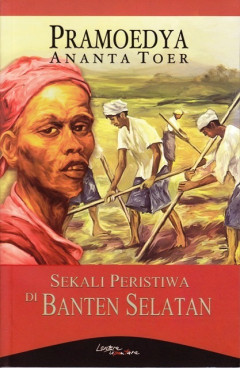
Sekali Peristiwa di Banten Selatan
This novel is a brief "reportage" by Pramoedya set in the lush yet vulnerable region of South Banten, plagued by looting and murder. The land may be fertile, but its people are impoverished, marginalized, and powerless, drained of their vitality. They are forced to live under the oppressive weight of fear, which further deepens their poverty. While their bodies may be confined, kicked, and t…
- Edition
- -
- ISBN/ISSN
- 9789793820040
- Collation
- 126 p; 20 cm
- Series Title
- -
- Call Number
- S PRA s

Sang Pemula
This novel tells the story of the life and struggles of Indonesia's prominent journalist R.M. Tirto Adhi Soerjo in establishing a national press. Told from a third-person perspective, it chronicles Tirto's journey from childhood to adulthood, highlighting key figures who support his efforts, such as Kartini. The narrative also paints a vivid picture of the social and cultural backdrop of Indone…
- Edition
- -
- ISBN/ISSN
- 9799731208
- Collation
- 15 cm x 21 cm.
- Series Title
- -
- Call Number
- F PRA s
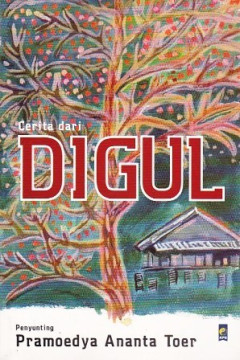
Cerita dari Digul
Cerita dari Digul is a collection of writings by the eka-Digulis, individuals who were exiled as political prisoners during the Dutch colonial era. These true stories recount their struggles and joys in surviving in the exile of Digul, West Papua. The narratives are both poignant and moving, highlighting the harsh realities they faced while trying to maintain their lives in this remote land.
- Edition
- -
- ISBN/ISSN
- 9789799023490
- Collation
- XXIII + 314 hlm.; 14cm x 21 cm
- Series Title
- -
- Call Number
- F PRA c

Menggelinding 1
In the early stages of his writing career, Pramoedya produced a variety of literary forms, including prose, poetry, short stories, and essays. These works were published in various magazines and other media, and it was only later that Astuti Ananta Toer compiled them into a book titled **Menggelinding**. This book beautifully captures the journey of a writer in search of his own voice and ideas.
- Edition
- -
- ISBN/ISSN
- 9789799731227
- Collation
- 576 hlm.; 13 x 20 cm
- Series Title
- -
- Call Number
- F PRA m
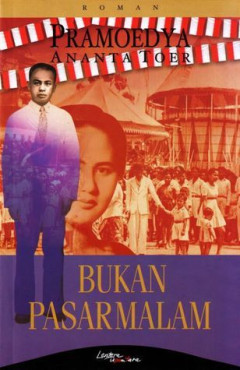
Bukan Pasar Malam
The journey of a revolutionary child returning home because his father has fallen ill unfolds a series of emotional fragments that had previously been overshadowed by the fervor of the revolution. The story reveals how a person’s bravery during the revolution ultimately softens when faced with everyday realities: he discovers his devoted teacher father lying sick with tuberculosis, a strug…
- Edition
- -
- ISBN/ISSN
- 9789799731210
- Collation
- 13 cm x 20 cm
- Series Title
- -
- Call Number
- F PRA b
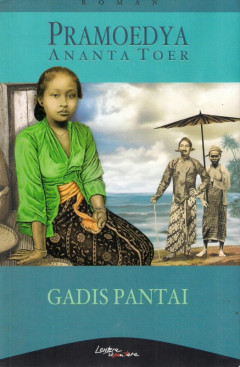
Gadis Pantai
"...This novel strikes at the heart of Javanese feudalism, which lacks civility and a sense of humanity, directly at its deepest core."
- Edition
- -
- ISBN/ISSN
- 9799731285
- Collation
- 270 p.; 20 cm
- Series Title
- -
- Call Number
- F PRA g
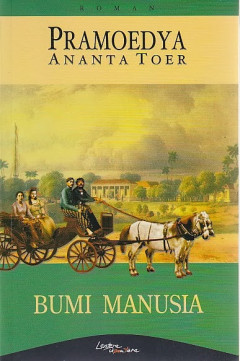
Bumi Manusia
The Buru Tetralogy takes place against the backdrop of the early 20th century, exploring the roots of the Indonesian nation. Reading it allows us to immerse ourselves in the era of the burgeoning national movement, intertwined with feelings, inner turmoil, love, and the struggles of anonymous heroines who nurtured the foundations of what would eventually become modern Indonesia. In the first…
- Edition
- -
- ISBN/ISSN
- 9789799731234
- Collation
- 535 p.; 21 cm
- Series Title
- -
- Call Number
- F PRA b
 Computer Science, Information & General Works
  Philosophy & Psychology
  Religion
  Social Sciences
  Language
  Pure Science
  Applied Sciences
  Art & Recreation
  Literature
  History & Geography