Filter by
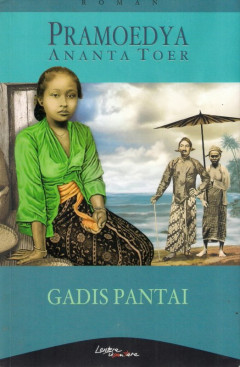
Gadis Pantai
Gadis Pantai lahir dan tumbuh di sebuah kampung nelayan di Jawa Tengah, Kabupaten Rembang. Seorang gadis yang manis. Cukup manis untuk memikat hati seorang pembesar santri setempat, seorang Jawa yang bekerja pada (administratif) Belanda. Dia diambil menjadi gundik pembesar tersebut dan menjadi Mas Nganten perempuan yang melayani "kebutuhan" seks pembesar sampai kemudian pembesar memutuskan untu…
- Edition
- -
- ISBN/ISSN
- 9789799731272
- Collation
- 14 x 20 cm.; 231 p.
- Series Title
- -
- Call Number
- F PRA g

Di Tepi Kali Bekasi
Through this novel, Pramoedya aims to overturn the conventional perspective on the narrative of the Republic's revolutionary history, which often positions the military and its generals as the heroic figures. The anonymous individuals, who lack access to the official history recorded by the palace, are marginalized and forgotten. Pramoedya endeavors to place these anonymous characters in their …
- Edition
- -
- ISBN/ISSN
- 99799731229
- Collation
- 15 cm x 21 cm
- Series Title
- -
- Call Number
- F PRA d

Mangir
This drama tells the story of a place called Mangir. Unlike other regions in the Mataram kingdom, Mangir is a Perdikan, or tax-exempt area, during the reign of Panembahan Senopati. This situation irritates Panembahan Senopati, prompting him to devise a plan to conquer Mangir.
- Edition
- -
- ISBN/ISSN
- 9799023408
- Collation
- XLIX + 114 hlm.; 14cm x 21 cm
- Series Title
- -
- Call Number
- F PRA m

Perburuan
The short novel —written during the author's time in prison—compels us to remember that freedom cannot be taken for granted or expected to arrive easily. The struggle for freedom carries the legitimate authority of those who endure, encompassing as much truth as we are capable of expressing through our writing.
- Edition
- -
- ISBN/ISSN
- 9798659007
- Collation
- vii, 173 hlm. ilus. ; 20cm
- Series Title
- -
- Call Number
- F PRA p

Cerita Calon Arang
The story of **Calon Arang** revolves around an evil old woman who practices black magic and feeds on human blood. Arrogant and ruthless, she eliminates her political adversaries and silences her critics. She revels in the suffering of others, committing acts of murder, theft, and violence. Possessing various magical abilities, she even forces her disciples to bathe in human blood. During her c…
- Edition
- -
- ISBN/ISSN
- 97997312105
- Collation
- 13 cm x 20 cm
- Series Title
- -
- Call Number
- F PRA c

Midah Simanis Bergigi Emas
Midah initially came from a respectable and religious family. However, due to injustices at home, she chose to escape, finding herself lost in the harsh streets of Jakarta in the 1950s. She emerged as someone who refused to surrender to her circumstances, even though she was just a singer known as “the sweet one with golden teeth,” performing as part of a street group that traveled from one…
- Edition
- -
- ISBN/ISSN
- 9799731275
- Collation
- -
- Series Title
- -
- Call Number
- F PRA m

Panggil Aku Kartini Saja
"...Kartini tidak punya massa, apalagi uang. Yang dipunyai Kartini adalah kepekaan dan keprihatinan dan ia tulislah segala-gala perasaannya yang tertekan itu. Dan hasilnya luar biasa, selain melambungkan nama Kartini, suaranya bisa terdengar sampai jauh, bahkan sampai ke negeri asal dan akar segala kehancuran manusia Pribumi..."
- Edition
- -
- ISBN/ISSN
- 97997312116
- Collation
- 15 x 22,5 cm ; 301 p
- Series Title
- -
- Call Number
- F TOE p

Tales from Djakarta : Caricatures of Circumstances and Their Human Beings
Tales from Djakarta is a collection of thirteen short stories written between 1948 and 1956 - a period of bitter transition from the revolutionary era to the beginnings of military rule in Indonesia. These stories not only give us a taste of Pramoedya's earlier writings, but also lead us on a tragic tour through mid-century Jakarta with her downtrodden residents as our guides.
- Edition
- -
- ISBN/ISSN
- 9780877277262
- Collation
- 17,5 x 25cm
- Series Title
- -
- Call Number
- F TOE t
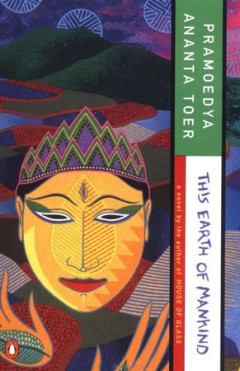
This Earth of Mankind = Bumi Manusia
Minke is a young Javanese student of great intelligence and ambition. Living equally among the colonists and colonized of 19th-century Java, he battles against the confines of colonial strictures. It is his love for Annelies that enables him to find the strength to embrace his world.
- Edition
- -
- ISBN/ISSN
- 9780140256352
- Collation
- 20 cm, 367 p.
- Series Title
- -
- Call Number
- F 899.221 TOE t
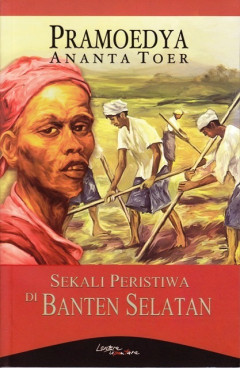
Sekali Peristiwa di Banten Selatan
This novel is a brief "reportage" by Pramoedya set in the lush yet vulnerable region of South Banten, plagued by looting and murder. The land may be fertile, but its people are impoverished, marginalized, and powerless, drained of their vitality. They are forced to live under the oppressive weight of fear, which further deepens their poverty. While their bodies may be confined, kicked, and t…
- Edition
- -
- ISBN/ISSN
- 9789793820040
- Collation
- 126 p; 20 cm
- Series Title
- -
- Call Number
- S PRA s

Sang Pemula
This novel tells the story of the life and struggles of Indonesia's prominent journalist R.M. Tirto Adhi Soerjo in establishing a national press. Told from a third-person perspective, it chronicles Tirto's journey from childhood to adulthood, highlighting key figures who support his efforts, such as Kartini. The narrative also paints a vivid picture of the social and cultural backdrop of Indone…
- Edition
- -
- ISBN/ISSN
- 9799731208
- Collation
- 15 cm x 21 cm.
- Series Title
- -
- Call Number
- F PRA s
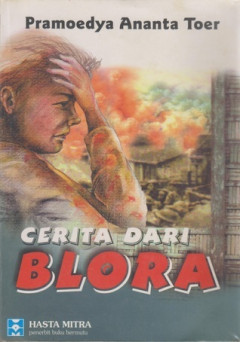
Cerita Dari Blora
**Cerita dari Blora** is a collection of short stories by PAT, written during the revolution from 1945 to 1949, while in and after his imprisonment in Bukit Duri, Jakarta. First published by Balai Pustaka in 1952, this collection has since been translated into various foreign languages, either in full or as individual stories. Each tale reflects events from the early years of the revolution in …
- Edition
- -
- ISBN/ISSN
- 9798659015
- Collation
- xiii, 322 hlm. ilus, ; 20 cm
- Series Title
- -
- Call Number
- F PRA c
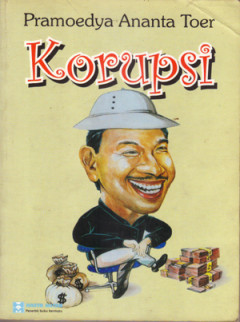
Korupsi
“If you truly refuse to be deterred in your intentions, soon you will sell your fortress of defense for money. Then you will remarry and distance yourself from your old friends or be distanced by them. You will find new companions, all living in fear. You will become prey, forced to run, continuously fleeing until you eventually collapse, drained of strength.”
- Edition
- -
- ISBN/ISSN
- 9798659260
- Collation
- 15 cm x 21 cm.
- Series Title
- -
- Call Number
- F PRA k
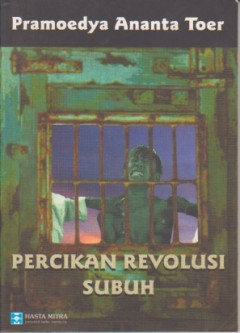
Percikan Revolusi Subuh
It has long been a question why the '45 generation, which was shaped by the arrival of the Japanese in Indonesia in 1942 and the subsequent revolution and war with the Dutch, has not produced a great novel. This is simply yet to come, and understandably so. Their strength lies, for now, in short stories and compact poems, imbued with sharp vision that prevents them from drifting aimlessly, even…
- Edition
- -
- ISBN/ISSN
- 9798659236
- Collation
- 15 cm x 21 cm.
- Series Title
- -
- Call Number
- F PRA p
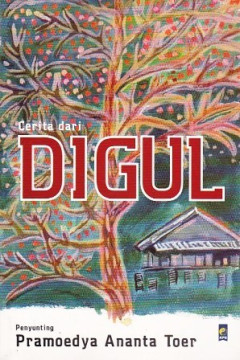
Cerita dari Digul
Cerita dari Digul is a collection of writings by the eka-Digulis, individuals who were exiled as political prisoners during the Dutch colonial era. These true stories recount their struggles and joys in surviving in the exile of Digul, West Papua. The narratives are both poignant and moving, highlighting the harsh realities they faced while trying to maintain their lives in this remote land.
- Edition
- -
- ISBN/ISSN
- 9789799023490
- Collation
- XXIII + 314 hlm.; 14cm x 21 cm
- Series Title
- -
- Call Number
- F PRA c

Menggelinding 1
In the early stages of his writing career, Pramoedya produced a variety of literary forms, including prose, poetry, short stories, and essays. These works were published in various magazines and other media, and it was only later that Astuti Ananta Toer compiled them into a book titled **Menggelinding**. This book beautifully captures the journey of a writer in search of his own voice and ideas.
- Edition
- -
- ISBN/ISSN
- 9789799731227
- Collation
- 576 hlm.; 13 x 20 cm
- Series Title
- -
- Call Number
- F PRA m
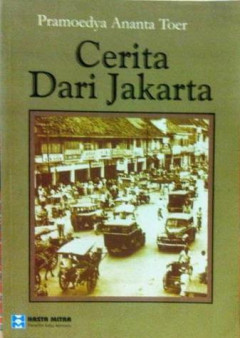
Cerita dari Jakarta
These stories were collected between 1948 and 1956, a period filled with bleak experiences, revealing a reality far from the beautiful hopes that emerged after the revolution for independence. The narratives from Jakarta serve as a social critique, taking on a caricature-like form within Pramoedya's literary oeuvre, depicting both the state and its people. Here, we encounter tales of figh…
- Edition
- -
- ISBN/ISSN
- 9798659252
- Collation
- 15 cm x 21 cm.
- Series Title
- -
- Call Number
- F PRA c
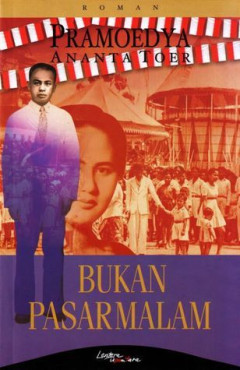
Bukan Pasar Malam
The journey of a revolutionary child returning home because his father has fallen ill unfolds a series of emotional fragments that had previously been overshadowed by the fervor of the revolution. The story reveals how a person’s bravery during the revolution ultimately softens when faced with everyday realities: he discovers his devoted teacher father lying sick with tuberculosis, a strug…
- Edition
- -
- ISBN/ISSN
- 9789799731210
- Collation
- 13 cm x 20 cm
- Series Title
- -
- Call Number
- F PRA b
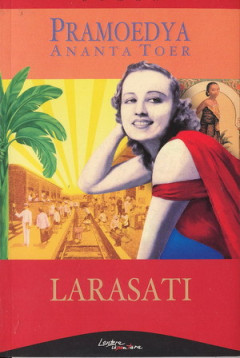
Larasati
**LARASATI** – a revolutionary novel set during the armed struggle from 1945 to 1950. It tells the story of young Indonesians who dedicate their lives to the fight for independence, exploring the lives of true heroes and hypocrites, as well as the conflicts in republican territories and Dutch-occupied regions. The narrative contrasts those who remain loyal with those who defect, and highlight…
- Edition
- -
- ISBN/ISSN
- 9799731295
- Collation
- 13 cm x 20 cm
- Series Title
- -
- Call Number
- F PRA l
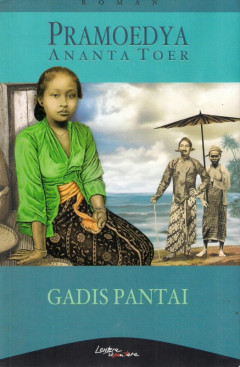
Gadis Pantai
"...This novel strikes at the heart of Javanese feudalism, which lacks civility and a sense of humanity, directly at its deepest core."
- Edition
- -
- ISBN/ISSN
- 9799731285
- Collation
- 270 p.; 20 cm
- Series Title
- -
- Call Number
- F PRA g
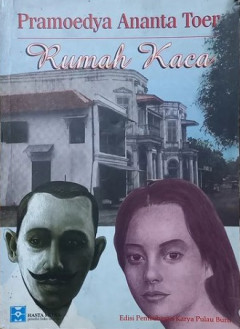
Rumah Kaca
The tetralogy is divided into four books, and the fourth novel, Rumah Kaca, reveals the colonial efforts to suppress all activities of the nationalist movement through a meticulously organized operation of archiving. Archives serve as the surveillance eyes of the Indies, placed everywhere to document the actions of activists. Pram cleverly refers to this archival politics as the process of "hou…
- Edition
- Pembebasan Karya Pulau Buru
- ISBN/ISSN
- 9798659155
- Collation
- 15 cm x 21 cm.
- Series Title
- -
- Call Number
- F PRA r
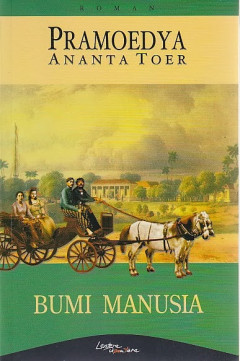
Bumi Manusia
The Buru Tetralogy takes place against the backdrop of the early 20th century, exploring the roots of the Indonesian nation. Reading it allows us to immerse ourselves in the era of the burgeoning national movement, intertwined with feelings, inner turmoil, love, and the struggles of anonymous heroines who nurtured the foundations of what would eventually become modern Indonesia. In the first…
- Edition
- -
- ISBN/ISSN
- 9789799731234
- Collation
- 535 p.; 21 cm
- Series Title
- -
- Call Number
- F PRA b
 Computer Science, Information & General Works
  Philosophy & Psychology
  Religion
  Social Sciences
  Language
  Pure Science
  Applied Sciences
  Art & Recreation
  Literature
  History & Geography