Text
A Passage to India
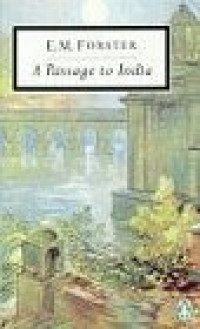
Forster explores the intersection of personal relationships and colonial politics through the story of Adela Quested, an Englishwoman, and Dr. Aziz, an Indian, as they navigate the ambiguous events that occur between them in the Marabar Caves in *A Passage to India*. This novel is a profound examination of cultural and social divides under British colonial rule.
Forster's own humanist beliefs are central to his work. As President of the Cambridge Humanists from 1959 until his death, and as a member of the British Humanist Association's Advisory Council, he was deeply committed to the values of humanism. These views are reflected in his writing, which often grapples with the challenges of forming personal connections amidst the constraints of societal expectations. His humanist outlook is most clearly articulated in his essay *What I Believe*, which, along with other essays, was posthumously reprinted in 1999.
Two of Forster's most well-known works, *A Passage to India* and *Howards End*, delve into the complexities of class differences and their impact on human relationships. *A Room with a View* also addresses the tension between social propriety and genuine human connection. Although *A Passage to India* is often regarded as his most accessible and widely read novel, Forster's posthumous work *Maurice* takes a different approach, exploring class reconciliation within the context of a homosexual relationship.
Sexuality is another recurring theme in Forster's writing. Some critics have argued that his exploration of love evolves from heterosexual to homosexual over the course of his career. *Maurice* and the short story collection *The Life to Come* both explicitly address issues of homosexuality, with *Maurice* being published shortly after Forster's death. The foreword to *Maurice* sheds light on Forster’s personal struggles with his own sexuality.
Forster is also recognized for his use of symbolism. His works are filled with symbols that often have a mystical or transcendent quality. For example, the wych elm tree in *Howards End* serves as a symbolic link between characters and their pasts, while the figures of Mrs. Wilcox and Mrs. Moore in both *Howards End* and *A Passage to India* embody a deeper connection with people and forces beyond their immediate social circles. Though his use of symbolism is admired, Forster was also criticized, notably by his friend Roger Fry, for his attachment to mysticism in his work.
Availability
Detail Information
- Series Title
-
-
- Call Number
-
F FOR a
- Publisher
- London : Penguin Books., 1989
- Collation
-
24cm., 362p.
- Language
-
English
- ISBN/ISSN
-
9780140187090
- Classification
-
F FOR a
- Content Type
-
-
- Media Type
-
-
- Carrier Type
-
-
- Edition
-
-
- Subject(s)
- Specific Detail Info
-
Pluit Putri Library
- Statement of Responsibility
-
FOSTRER, E.M
Other version/related
No other version available
File Attachment
Comments
You must be logged in to post a comment
 Computer Science, Information & General Works
  Philosophy & Psychology
  Religion
  Social Sciences
  Language
  Pure Science
  Applied Sciences
  Art & Recreation
  Literature
  History & Geography